Finding out you have a tiny spot of decay during a check-up can feel like no big deal, especially if it doesn't hurt yet.
However, many people wonder if a small cavity is serious enough to fix right away. The truth is that even though the hole is tiny now, it is a sign that your tooth's natural shield is broken.
Enamel does not grow back, so once a cavity starts, it will only get bigger and deeper over time. Fixing a small issue early is the best way to save your tooth and your money before a tiny spot turns into a painful emergency.
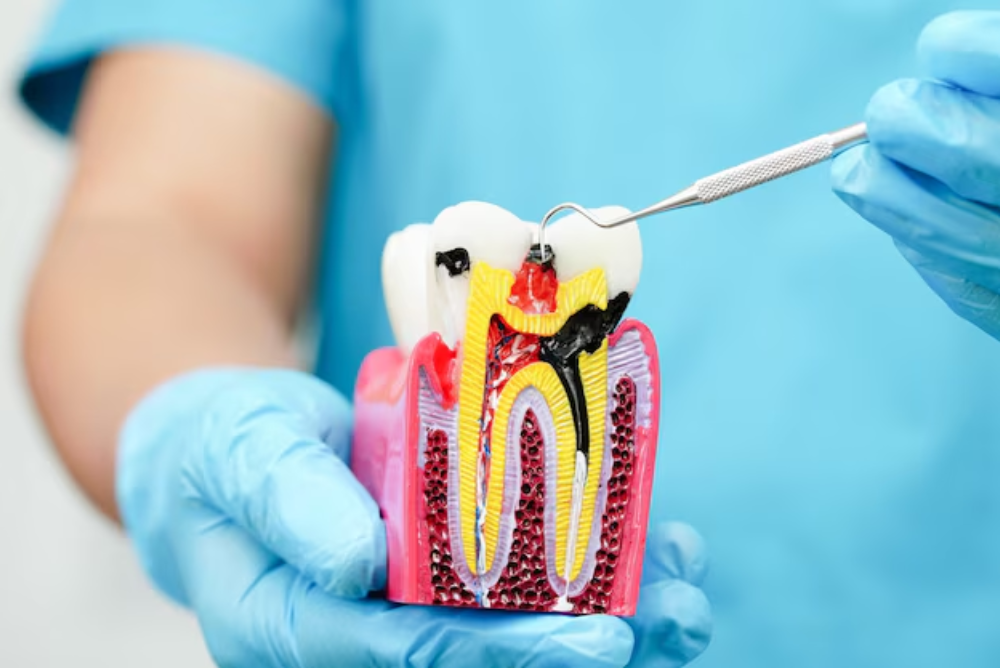
A cavity is like a slow-moving infection that eats away at your tooth. To understand what happens if a small cavity is untreated, you have to look at how a tooth is built.
Once germs break through the hard outer shell, they reach the soft middle of the tooth.
When decay is caught early, the fix is usually very simple and does not hurt. Looking for dental fillings near you is a smart move because a small filling keeps most of your real tooth safe.
These modern fillings are made of a material that matches the colour of your teeth perfectly.
By filling the small hole now, you seal out germs and stop the decay from moving deeper into the roots. This quick "patch" is much easier than waiting for the tooth to break, which would require much more expensive and difficult work.
| Feature | Small Cavity | Large Cavity |
| Pain Level | Usually none | Sharp or constant pain |
| The Fix | A simple filling | A crown or root canal |
| Time Needed | About 30 to 45 minutes | Several long appointments |
| Cost | Low and usually covered | Higher and more complex |
The biggest problem with small cavities is that they are often "silent". This means you can't feel them until they have already become a big problem. This is why seeing a dentist in Vinings twice a year is so important for your health.
During these visits, the doctor uses special tools and X-rays to find decay hiding between teeth or under old fillings. Finding a problem when you can't even see it yet allows for the easiest care possible.
Your dental team can also give you fluoride treatments to help make weak spots strong again.
Waiting for a tooth to hurt before getting help is a risky plan that usually leads to higher bills. A dentist near you would much rather do a simple filling than have to pull a tooth in an emergency.
When a cavity is ignored, the infection can spread to the jawbone or even other parts of your body. Also, losing a tooth completely means you might need expensive implants or bridges later. Taking care of a small spot today is a great gift to your future self and your budget.
A common question is whether better brushing can make a cavity go away.
While you can sometimes strengthen a very early soft spot, a real hole in the tooth cannot be fixed with a toothbrush.
Once your small cavity is fixed, you want to make sure you don't get another one. Simple changes to your daily routine can make a huge difference.
A small cavity might look like a tiny problem, but it is actually a sign of bigger trouble coming. Taking care of it now is the best way to keep your smile healthy and pain-free.
When you handle dental issues while they are small, your visits are quick, easy, and stress-free. Our team is here to help you catch these minor issues early so you can get back to your life with a healthy mouth.
At Heart of Vinings Dentistry, we focus on gentle care to keep every patient's smile in top shape.
Would you like me to book a quick exam to check on that spot and see if a simple filling can save your tooth? Contact Heart of Vinings Dentistry today to get started!
Does a small cavity always hurt?
No, most small cavities have no symptoms at all, which is why check-ups are the only way to find them.
How long does it take for a small cavity to get big?
It’s different for everyone, but a cavity can grow a lot in just six months to a year.
Can a small cavity cause bad breath?
Yes, because the hole traps food and germs that rot, it can lead to a bad taste or smell.
Is it safe to wait a few months for a filling?
It is always better to get it done now; waiting gives the germs more time to get closer to the nerve.